
Succeeding at Nothing
When Worship and Piety Betray God and the Poor


I’ve been haunted lately by a pair of quotes that circle the same unsettling truth. One says, “Our greatest fear should not be of failure, but of succeeding at things that don’t really matter.” Another: “The greatest threat to success is an attractive path to a lesser goal.”
They float around the internet with different attributions, but the sting is what matters. They name a deeper dread than failure: spending your life climbing the wrong ladder, chasing success that looks impressive but ends up hollow. That danger isn’t confined to the religious right. It shows up on the religious and secular left too, when piety takes the form of polished language or posture but drifts away from the work of liberation.
The Prophets and Hollow Piety
The Hebrew prophets wrestled with this centuries ago. Amos thundered in God’s name: “I hate, I despise your festivals, and I take no delight in your solemn assemblies… Take away from me the noise of your songs; but let justice roll down like waters, and righteousness like an ever-flowing stream.”
Israel’s calendar of sacrifices and songs was intact. Outwardly, things looked like success. But the prophets said it was worthless because it didn’t lead to freedom for the poor or protection for the vulnerable.
They weren’t dismissing worship itself. They were naming the truth that devotion, no matter how diligent, is dead if it doesn’t bend toward justice. Success at the wrong goal isn’t harmless. It’s offensive.
Jesus and the Weightier Matters
Jesus carried that same critique. He told the Pharisees, “You tithe mint, dill, and cumin, but you neglect the weightier matters of the law: justice and mercy and faithfulness. These you ought to have done, without neglecting the others.”
Picture it: religious experts measuring herbs down to the last seed, while the heart of the law slipped through their fingers. Success at the wrong thing.
Jesus didn’t dismiss worship or ritual. He reordered them. Piety only makes sense when it is oriented toward mercy and faithfulness. Otherwise, it’s empty success, like climbing a ladder leaned against the wrong wall.
Bonhoeffer and Cheap Grace
Dietrich Bonhoeffer made the same point in the twentieth century, watching the German church congratulate itself on respectability while blessing Hitler’s rise. He called it cheap grace: forgiveness without repentance, baptism without discipline, communion without discipleship.
It was a religion that felt successful. The pews were filled, the clergy dignified, the institutions intact. But the success was hollow because it wasn’t tethered to justice, mercy, and costly solidarity. In the end, it was complicit in oppression.
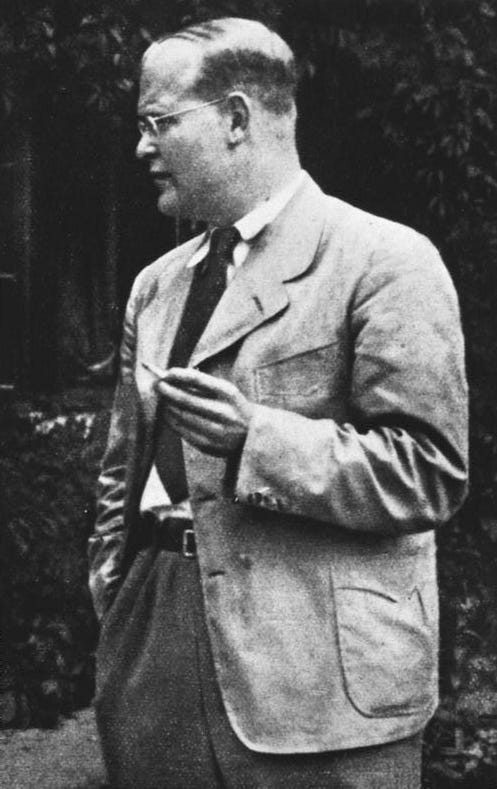
Bonhoeffer’s warning lingers. You can build a thriving religious life, even a thriving church, and still succeed at nothing. Others throughout Christian history make this same point: The book of James says that true religion is shown in care for orphans and widows. Simone Weil said attention to God becomes false if it doesn’t become attention to the afflicted. Martin Luther King Jr. warned that a faith focused only on the soul while ignoring poverty and injustice turns to dust. Together, these voices amplify Amos and Jesus, pressing the same refrain: piety has meaning only when it bears the fruit of justice and mercy.
The Danger Today
It isn’t just a problem on the religious right, though that side offers obvious examples. It shows up on the religious and secular left too, when the performance of moral correctness becomes the goal. Piety takes the form of the right language, the right causes, the right postures. It can feel righteous, even radical, but if it doesn’t move toward liberation, it remains a lesser goal.
There’s another trap. Even when liberation is the stated focus, it can be swallowed by an algorithmic news cycle. Movements risk becoming performances of allegiance to the “correct” side, optimized for clicks, applause, or outrage, while drifting from the harder, slower work of justice. Algorithms reward speed and spectacle, not transformation. When our energy is consumed proving ourselves on those terms, we end up serving the machine instead of the mission.
The cost isn’t only personal. Entire communities can get swept into the churn, mistaking visibility for victory. What looks like momentum can turn out to be nothing but noise.
What Really Matters
From Amos to Jesus, from Bonhoeffer to King, the witness is consistent: piety matters only if it serves liberation. That is the measure of success. Anything else is just succeeding at nothing.
The challenge is not to abandon devotion or conviction, but to let them be tested by their fruit. Do they lead to mercy, justice, and freedom for the vulnerable? If not, we may find ourselves winning at the wrong game while losing sight of what we set out to fight for. The real question is whether the results of our lives, our speech, and our actions move toward the realization of liberation for the oppressed.