
Against Sacred Nations
Christian Cosmopolitanism and the Class Struggle


I was recently visiting a dear friend, Spencer Sharpe, in Nashville. I’d gotten new t-shirts from a worker-owned company, Means Workwear (I do not get paid for this), for some of my friends for Christmas and Spencer was going to be my Santa to deliver them for me. One of them said “Class War Combat Club.” With this on the brain, and in reference to a recent video I’d posted about Christian nonviolence, Spencer asked me: “Can any war be just?”
I said no.
He laughed. “Oh wow, so you’re against class war and call yourself a leftist. Interesting.”
It was a funny moment that happened in passing. We moved on. But I couldn’t stop thinking about it.
I’ve written in the past about both nonviolence and my resistance to the idea that those of us living safely in the imperial core should have any business telling oppressed people how they can and cannot resist their oppression. That tension did not rest easy in me. Can I claim to oppose all violence while also refusing to condemn those who fight for their liberation? Can I call myself a leftist while rejecting the reality of class war? Can I be a Christian who takes the Sermon on the Mount seriously while acknowledging that the gospel might require conflict, even violent conflict, with the powers that exploit and dominate?
This essay is my attempt to work through those questions. To answer them, I had to go deeper than I expected. It became necessary to understand nationalism as ideology, capitalism as permanent antagonism, and what Christian faithfulness actually looks like when you take class struggle seriously. Two writers in particular helped me see clearly: Herbert McCabe, a Catholic priest and theologian who brings unsparing class analysis to Christian theology, and David Bentley Hart, an Orthodox theologian whose vision of “polyphonic politics” offers the most penetrating critique of nationalism I’ve encountered. What makes them valuable isn’t that they’re leftists who happen to be Christian. It’s that they make their case from deep within the Christian tradition itself. They’re not importing foreign ideas into Christianity. They’re recovering what was there from the beginning.
I grew up as a right-wing Christian nationalist fundamentalist, convinced that loving God meant loving America, that defending the nation was defending the faith. I believed with total sincerity that our way of life was God’s way of life, that our enemies were God’s enemies. It took years to see what should have been obvious: “our way of life” meant their wealth, “our country” belonged to the ruling class, and we were fighting a war against ourselves on behalf of people who held us in contempt.
The path out has been long and difficult. I’m still walking it, still wrestling with questions I once thought settled. But what McCabe and Hart showed me is that Christians face a choice most don’t realize they’re making. The choice between the nation-state and the body of Christ. Between ethnic solidarity and class consciousness. Between a Christianity that blesses power and one that threatens it. Between sacred nationalism and Hart’s polyphonic politics: a genuinely cosmopolitan vision rooted in the scandalous claim that in Christ there is neither Jew nor Greek, neither slave nor free.
You cannot serve both. And most Christians, without meaning to, have chosen the wrong side.
How Nationalism Invented Itself
To understand why Christian nationalism is a contradiction, you first need to understand what nationalism actually is. Not the love people naturally feel for their home, which is real and good. But the ideology of the nation-state, which Hart argues is one of modernity’s most successful lies.
The modern nation-state required conquering how people remembered their past. Before the early modern period, myth and history weren’t sharply separated. Stories of gods and heroes belonged to everyone even as they took local forms. The mythic patterns were universal, crossing cultures, speaking to something deeper than ethnic identity.
Nationalism couldn’t tolerate that. To create the ethnic state, to convince people they belonged to a fixed, bounded nation with interests opposed to other nations, you had to manufacture a new kind of memory. Real history, with its messy mixing of peoples and constant exchange across borders, had to be erased. “Ancient” traditions had to be invented. National mythologies had to be crafted from scratch.
Hart’s examples are specific and damning. The France we imagine as eternal barely existed by the mid-1800s. Scottish tartans as clan markers are mostly Victorian inventions. The modern Welsh Eisteddfod with its “druidic” ceremonies dates to the nineteenth century. These aren’t just romantic nostalgia. They’re evidence of systematic historical erasure in service of state power.
On November 19, 1789, twelve hundred National Guards from Languedoc, Dauphiné, and Provence swore they would no longer be Languedociens, Dauphinois, or Provençaux, but only “men of France.” Real identities dissolved into an abstract ethnic unity that existed mainly as state power. The irony, as Hart notes, is this happened in the name of revolutionary liberation. Overthrowing the monarchy didn’t lead to real freedom but to what Hart calls “ever greater assimilation to the state.”
But why? Why did the modern world need this fiction?
Whose Nation? Whose Interests?
The answer is brutally simple: nationalism serves capital.
Hart explains how Marx grasped this with special clarity. The nation-state, Hart writes, has “the power to turn the hostility of the poor and of laborers away from those who actually exploit and oppress them, and against those who would naturally be their class allies around the world, by conscripting their passions and disaffections and ‘native’ loyalties into the project of the nation-state, even though the state and its riches actually belong only to the wealthy and the powerful.”
This is nationalism’s core deception: convincing you that you share interests with the billionaire who profits from your labor rather than with the worker in another country who shares your exploitation. That the migrant at your economic level is your enemy while the oligarch extracting surplus value from both of you is your champion.
Hart puts it starkly: “It is almost impossible to convince the working poor in most countries of what should be the most obvious of truths: that this country is not your nation; it does not belong to you; you belong to the state, which itself belongs to the rich. Your true nation, your true people, from which you exist to a great degree in exile, consists in the ‘wretched of the earth’ and the ‘workers of the world’ and all who toil or spin.”
Think about what this means. Your real allies aren’t the people who happen to share your passport and skin color. They’re the people in Venezuela whose government was just overthrown so American oil companies could seize their resources. The Palestinians being ethnically cleansed so Gaza can become luxury real estate. The workers in Bangladesh making your clothes. The miners in Congo extracting cobalt for your phone.
We’ve reached the point where the mask is off. Trump announces openly that we’re taking Venezuela’s oil, that Greenland should be annexed, that Gaza will become prime real estate once its current population is removed. These aren’t departures from American policy. Obama droned weddings. Biden armed genocide. Every president participates in the same project. The difference now is the pretense has been dropped.
And significant numbers of Christians cheer. People who claim to follow a refugee executed by empire are cheering for empire. They’ve been so thoroughly captured by nationalist ideology they cannot see the class war being waged against them, much less the global suffering their “nation” requires to maintain its position.
This isn’t unique to Republicans. Democrats bomb different countries with softer language, but the structure stays the same. Both parties manage the same empire, serve the same ruling class. Both participate in what Hart calls the “irresoluble dialectic” of late modernity: endless oscillation between corporate globalism (which homogenizes everything into consumer capitalism) and ethnic nationalism (which fragments people into warring tribes). Neither offers real solidarity or freedom. Both serve capital.
Nationalism serves capital by keeping workers divided. It ensures you feel more kinship with a billionaire holding your flag than with a worker under a different one.
Capitalism as Permanent War
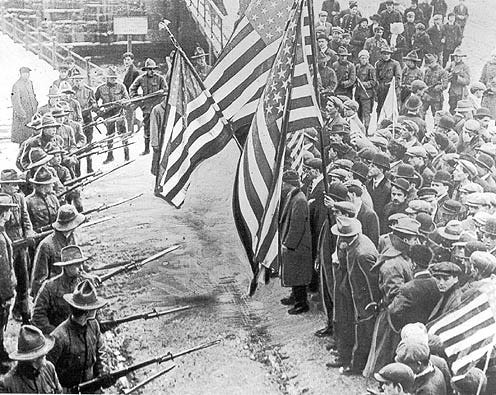
McCabe’s analysis helps us see why nationalism and capitalism fit together so perfectly. Capitalism isn’t just buying and selling. Humans have always traded. Capitalism is something specific: a system where those who own the means of production extract surplus value from those who don’t, accumulating that surplus as capital for further profit, in an endless cycle that requires keeping most people poor to make a few people rich.
Here’s McCabe’s crucial insight: “The class war is intrinsic to capitalism. It is part of the dynamic of the capitalist process itself.” This isn’t something revolutionaries invented. The class struggle is simply what capitalism is. An antagonism built into the structure, where capital and labor have fundamentally opposed interests. The worker wants higher wages; the capitalist wants lower costs to maximize profit. This conflict isn’t a bug in the system. It’s how the engine runs.
And this is why nationalism is essential to capitalism’s survival. If workers across borders recognized their shared interests, the system would face its greatest threat. Nationalism fragments the working class at exactly the point where capitalism is most vulnerable: the international level.
McCabe’s point, which cannot be stressed enough: “The class struggle is not something we are in a position to refrain from. It is just there; we are either on one side or the other. What looks like neutrality is simply a collusion with the class in power.”
This is where most Christians fail, even progressive ones. They want to stand above the struggle, be peacemakers, love everyone equally without taking sides. They dream of a society where class antagonism dissolves through goodwill and better policy. But this vision isn’t just naive. It’s reactionary.
McCabe argues that this kind of Christian idealism, “by diverting attention from the realities of the class war such dreaming plays into the hands of one of the protagonists of that war—the one that is on the side of war.” Think of the Peace Movement in Northern Ireland. It began as genuine outrage against sectarian violence but ended up serving British propaganda because it offered no actual program for peace, only the dream of it.
The same applies to liberal Christianity’s social gospel. Calls for justice, dignity, fair wages are all good. But they’re perfectly compatible with capitalism as long as they don’t threaten capital’s core power. You can have a “Christian society” that treats workers slightly better and still have capitalism. Still have class war. Still have extraction of surplus value. Still have global immiseration.
What’s wrong with capitalism isn’t inequality, though it produces monstrous inequality. The problem is antagonism. Capitalism is a social order built on permanent war. And this directly contradicts Christianity, which, as McCabe writes, “announces the improbable possibility that men might live together without war; neither by domination nor by antagonism but by unity in love.”
The Nation-State as Anti-Church
Hart’s analysis shows how the nation-state isn’t just allied with capitalism. It’s capitalism’s necessary political form. Global capital’s “borderless rule,” Hart argues, requires a world “quarantined by ever more impregnable borders into discrete ‘markets’—which is to say, separate areas of absolute sovereignty, law, and coercive power, each invested with a numinous aura of sacral inviolability.”
The nation-state fragments humanity into competing units while capital operates globally. This isn’t a contradiction. It’s how the system works. Capital needs borders to trap labor while staying free to flow wherever profit calls. It needs national identities to prevent class consciousness from forming across borders.
Hart calls this “metaphysical nihilism made concrete in the political and social spheres.” A devotion to a past that never existed, sustained by sheer assertion of will. The nation-state, he writes, is “childish playacting, performed on a largely empty stage against a crudely daubed pasteboard backdrop.” But the playacting has real consequences: real borders, real deportations, real bombs, real bodies.
And it represents, Hart argues with rising intensity, “the ultimate negation of the Christianity of the apostolic age.”
The church that emerged from Pentecost was deliberately, radically cosmopolitan. The gospel announced in Acts is that in Christ, ethnic divisions have been abolished. The most fundamental human distinctions, the ones people had killed for since the beginning, were dissolved. “There is neither Jew nor Greek, neither slave nor free, neither male nor female, for you are all one in Christ Jesus.”
This wasn’t metaphor. It was scandal. Baptism created an identity that superseded all “natural” identities. To be in Christ meant belonging to a new city, a new citizenship that made all earthly citizenship secondary at best.
The modern nation-state arose directly against this vision. Hart traces how Spain’s formation as an ethnic state explicitly put racial identity above Christian identity through limpieza de sangre, purity of blood. For the first time, Jewish and Muslim converts to Christianity were treated as permanently alien even after generations, because ethnicity now trumped baptism. As Hart writes, “Nationality in both the ethnic and political sense took preeminence over the notion that baptism was an entry into a corporate reality that effaced all ‘natural’ divisions.”
This was the birth of the modern order. It required killing something essential in Christianity. The universal had to be conquered for the local. The body of Christ had to be torn into national churches.
The church didn’t just accommodate nationalism. It helped create it. And now, centuries later, large parts of the church are doubling down, explicitly identifying Christian faith with national identity, baptism with bloodline, the kingdom of God with American empire.
What Love Actually Requires
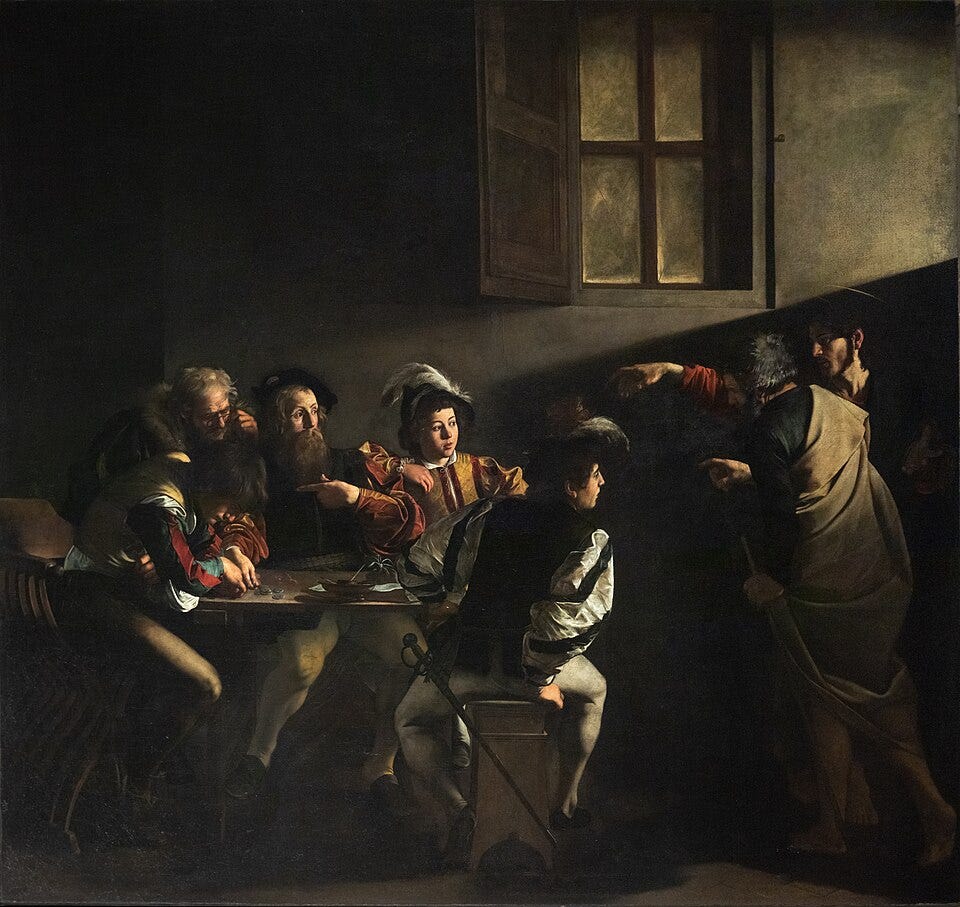
So what are Christians supposed to do? If capitalism is permanent class war, if nationalism is capitalism’s political shell, if both fundamentally oppose the gospel, where does that leave believers?
McCabe’s answer allows no escape: “The Christian who looks for peace and for an end to antagonism has no option but to throw himself wholeheartedly into the struggle against the class enemy; he must be unequivocally on one side and not on the other.”
This sounds shocking to Christians raised on the Sermon on the Mount, on turning the other cheek, on loving enemies. How can Jesus’s command to love coexist with class struggle?
McCabe argues we have it backwards. Christian love doesn’t forbid class struggle despite the gospel. Love requires struggle because love cannot tolerate a system built on antagonism and exploitation. The mistake is thinking love means avoiding conflict. In a world structured by domination and extraction, love will necessarily mean conflict. If your faith never puts you at odds with capital, it isn’t love. It’s ideology wearing religious clothing.
This is why McCabe insists the Sermon on the Mount doesn’t counsel retreat. It provides revolutionary discipline. “Blessed are the meek for they shall inherit the earth” doesn’t mean passivity. It means not being the loudmouth who joins movements to work out personal problems. “Love your enemies” doesn’t mean letting them exploit you. It means fighting them without hatred, without caricature, without losing sight of their humanity even as you work to destroy their power.
McCabe writes: “Real revolutionaries are loving, kind, gentle, calm, unprovoked to anger. They don’t hit back when someone strikes them, they do not insist on their own way, they endure all things; they are extremely dangerous.”
Dangerous not because they’re violent, though we’ll address that. Dangerous because they can’t be bought off, intimidated, or distracted. They’ve learned to see through the lies keeping the system running.
The discipline McCabe describes is the opposite of what drives most people into politics. It requires self-knowledge, having, as he puts it, “caught on to themselves,” having “recognised their own infantilisms and to some extent dealt with them.”
This is why McCabe doesn’t give Christians revolutionary heroes to copy or movements to follow uncritically. The gospel doesn’t offer blueprints or exemplars to imitate from a comfortable distance. It demands entrance into actual conflicts over power, labor, and life.
What McCabe offers instead is a principle: wherever Christians actually side with the oppressed against dominant structures, something true is happening, even if it’s imperfect. He doesn’t point to heroes. He points to sites of struggle. Wherever Christians genuinely choose solidarity with the exploited over comfort with exploiters, the gospel becomes visible, even if the forms are flawed, contradictory, shot through with error.
This refusal to lionize specific people or movements keeps Christianity from becoming ideology, from turning into another set of positions to adopt rather than a lived practice. If your faith never costs you anything, never puts you in tension with power, never forces difficult choices, you’re not actually practicing Christianity. You’re consuming it.
And this brings us to the question Christians most want to avoid: violence.
The Question of Revolutionary Violence
McCabe doesn’t dodge it. He argues that while violence is never a clear expression of love (you wouldn’t point to someone being killed as an obvious example of what love looks like), it can still be compatible with love. In certain circumstances, even required by it.
His reasoning follows the Christian just war tradition, which recognized that violence, while always evil, isn’t an intrinsic evil like injustice is. You can coherently say “I’m using violence to achieve justice,” even if it’s tragic. You can’t coherently say “I’m committing injustice to achieve justice.” That’s just contradiction.
The key is recognizing love isn’t restricted to person-to-person relationships. That’s what McCabe calls “a bourgeois liberal error.” Love extends to social structures, to whole communities, to the conditions that make human life possible. Sometimes protecting those structures requires stopping individuals who put private interest above common good.
This is true even outside revolution. Christians accept police using force to stop immediate harm. They accept imprisonment for serious crimes. The question isn’t whether force can ever align with love but whose force serves what ends.
When the capitalist class defends its privileges with violence, and it does constantly through police, military, and state coercion, responding with force isn’t introducing violence to a peaceful situation. It’s acknowledging the violence already present and refusing to submit.
McCabe is clear violence has little role in class struggle itself, at least currently in the West. The real work is organization, education, solidarity. As he writes, “Any adventurist violent posturings, which will merely hasten the dismantling of these democratic freedoms, are simply counter-revolutionary.” The ruling class is better at violence. They have more guns, more training, more willingness to kill. Meeting them there is suicide.
But here’s the hard truth: the ruling class won’t voluntarily surrender power when genuinely threatened. We’ve seen it in Chile, across Latin America, everywhere meaningful change seemed possible. As McCabe puts it, “In the end the workers will need not only solidarity and class consciousness but guns as well.” Not yet in the West, where some democratic space exists. But eventually. Because the alternative is accepting permanent exploitation.
Christian objections usually take two forms. Either violence is always wrong (pacifism), or violence is justified only when the state uses it (traditional just war theory). McCabe rejects both. Against pacifism: sometimes love requires fighting, even killing, those who can’t be stopped otherwise. Against traditional just war theory, McCabe insists: “The only just war is the class war, the struggle of the working class against their exploiters.”
Here’s the scandal. Christians have grown comfortable blessing troops who kill poor people abroad for American economic interests. Churches accept buildings full of regimental flags and monuments to colonial wars. But suggest Christians might take up arms against their own ruling class, and suddenly violence becomes unthinkable.
As McCabe puts it: “There is probably no sound on earth so bizarre as the noise of clergymen bleating about terrorism and revolutionary violence while their cathedrals are stuffed with regimental flags and monuments to colonial wars.”
What makes revolutionary violence potentially justified in McCabe’s framework isn’t revenge or punishment. McCabe writes: “The revolutionary, who will reject all conspiracy theories of society, is the last person to blame the corrupt social order on the misdeeds of individuals.” The revolution is for everyone, oppressor and oppressed, because only beyond class antagonism can anyone truly be free.
But Christians can’t pretend liberation won’t require overcoming those who benefit from the current order and will fight to preserve it. Chile stands as McCabe’s warning: Allende’s democratic socialism crushed by a U.S.-backed coup, thousands murdered, torture chambers running with American support. What Christian pacifism could be adequate to that?
I realize this is where some will stop reading. But if you’re still here, ask yourself: why is violence for capital always justified, always blessed, always necessary, but violence against capital always unconscionable?
McCabe isn’t importing foreign ideas into Christianity. He’s showing how the tradition’s own principles, understood properly and freed from ideological capture by power, lead to this conclusion. If you reject it, you need to show where the theology fails. You can’t just appeal to vague feelings about Jesus being nice.
Loving Your Enemies While Fighting Them
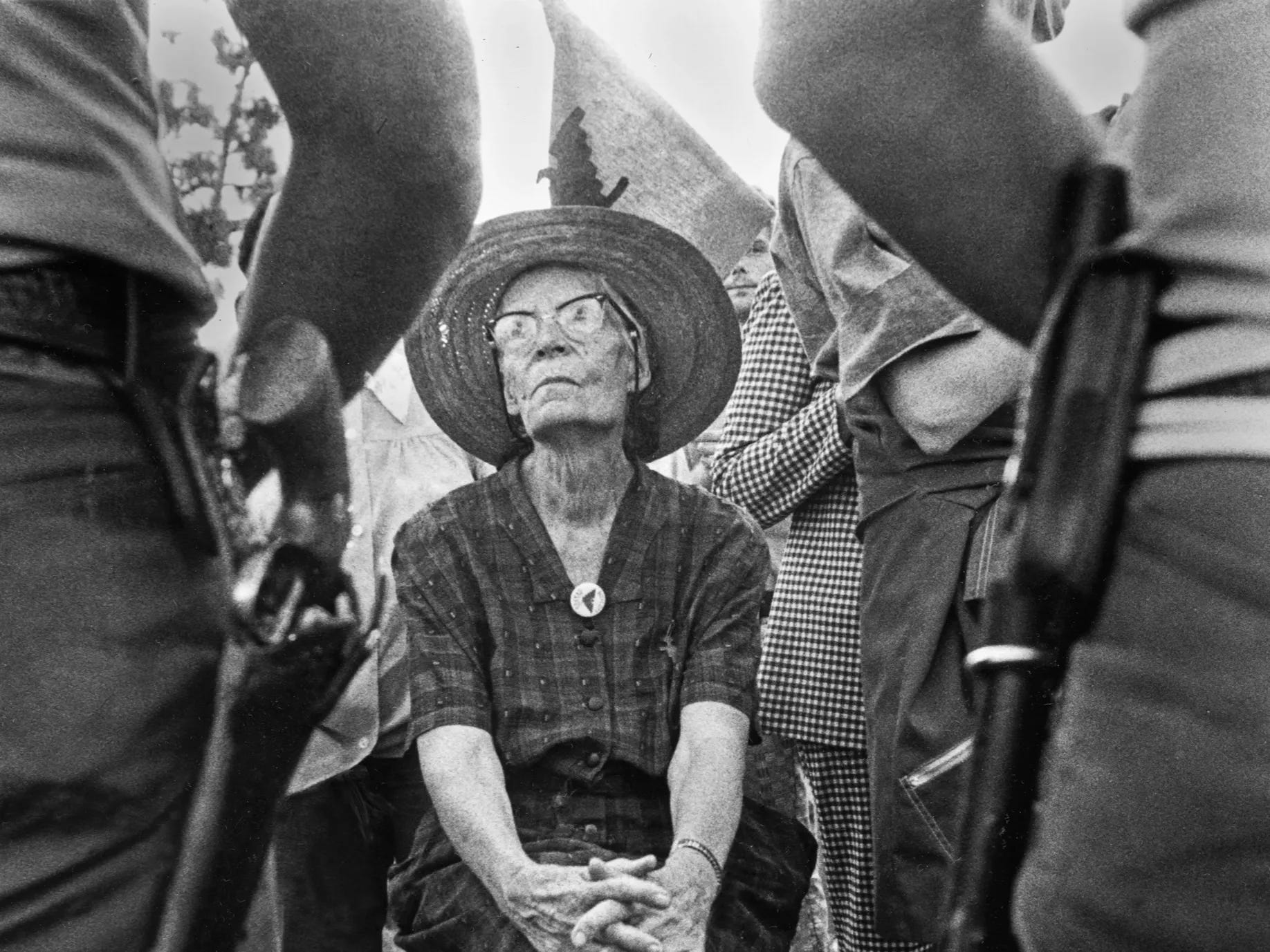
Here’s where McCabe’s argument becomes genuinely profound, where Christians have resources that secular politics lacks. The paradox of Christian participation in class struggle is fighting people, possibly to the death, whom you nonetheless recognize as made in God’s image, for whom Christ died, who aren’t ultimately enemies but fellow victims of the same broken order.
McCabe writes: “There is a paradox, but no contradiction, in being able by the grace of God to love the person you must fight; there is a paradox, but no contradiction, in having an enemy who must be destroyed and yet who is not in any ultimate sense the enemy but one for whom Christ also dies.”
This is possible, McCabe argues, only because Christians see the present from the future’s perspective. Through grace (what he calls the “presence of the future”), Christians can adopt something like God’s view, embracing both just and unjust. This, McCabe insists, “does not make the unjust any less unjust; this does not in any way diminish the need for the struggle, the need for smashing the power of the exploiter and oppressor, but it does, in the end, make hatred impossible.”
This is what distinguishes Christian engagement in class struggle. Not that Christians are nicer or less willing to do what’s necessary. But there’s theological ground for refusing to reduce opponents to monsters, for maintaining their humanity while destroying their power, for combining total commitment to struggle with ultimate reconciliation.
This isn’t tactical. It’s about what Christians believe the world actually is: a creation shot through with grace, bent toward redemption, moving toward consummation where all things will be reconciled in Christ. The class struggle is real and necessary. But it isn’t ultimate. Beyond it lies the kingdom: no more classes, no more antagonism, no more violence, no more tears.
But we’re not there yet. The way forward, the only path that doesn’t mean accepting permanent exploitation, is through the struggle. Not around it, not above it. Through it.
Polyphonic Politics: Beyond the Nation-State
If nationalism serves capitalism by fragmenting working-class solidarity globally, what does Christian cosmopolitanism actually look like? Hart’s vision of polyphonic politics offers the answer: human community that’s neither corporate globalism’s homogenizing force nor ethnic nationalism’s fragmenting tribalism.
The metaphor is musical. Polyphony is multiple voices singing different melodies that combine into harmony. It needs both distinctiveness (each voice genuinely different) and coordination (singing together, not chaos). Applied politically, it means social order preserving real difference while rejecting borders as absolute divisions and recognizing solidarity across place.
This is what civilization actually is when alive and flourishing. As Hart writes, “Every civilization is a polyphonic accord of incalculably many differences, and continues to live and thrive only so long as it remains open to renewing waters from other springs.” European civilization wasn’t pure ethnic essence. It was, in Hart’s words, “a living and constantly changing reality without fixed borders, and most alive and pregnant with a future when it was open by avenues of trade and reciprocal influence to the East and South.”
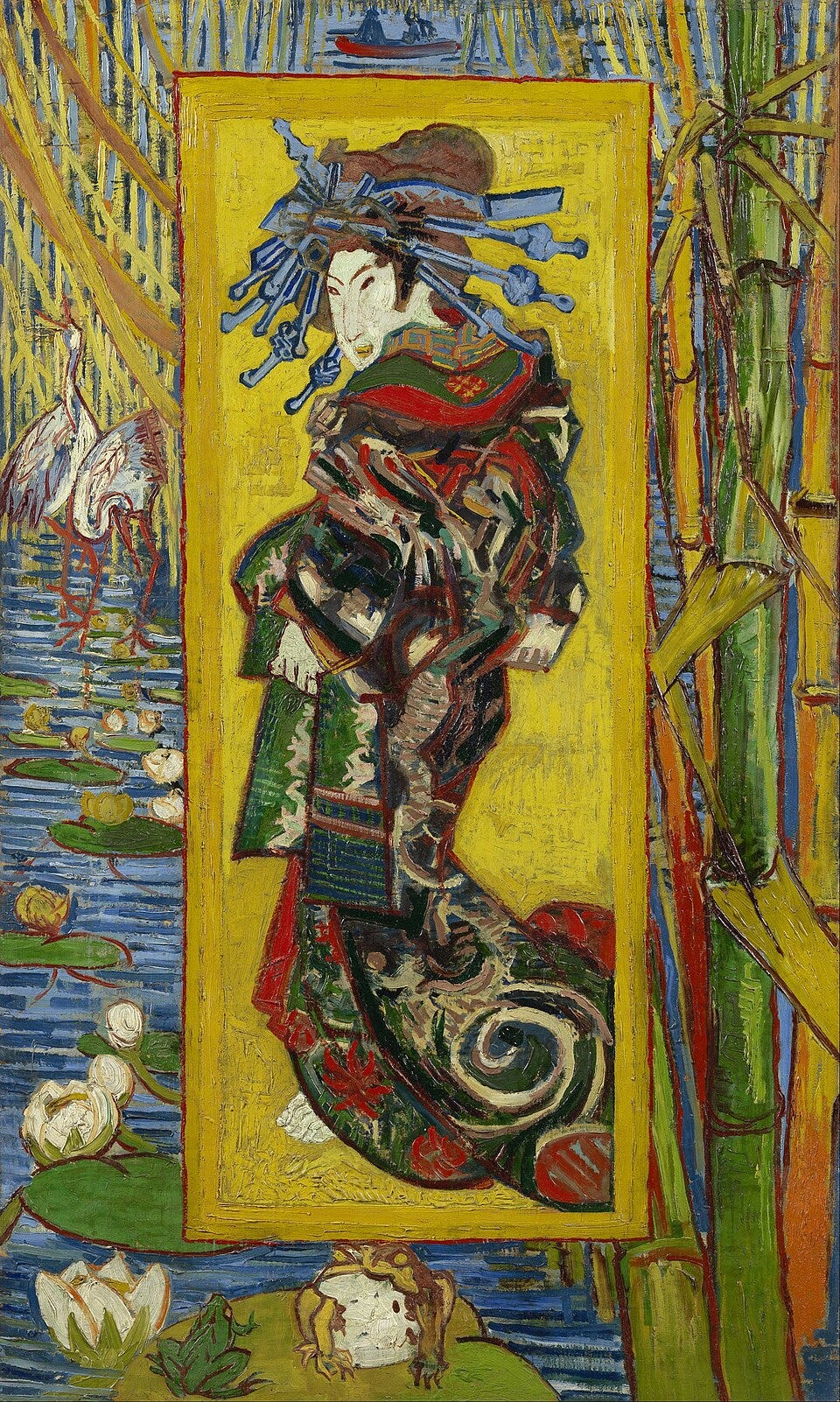
True civilization is Van Gogh drawing from Hokusai. Takemitsu falling under Bach’s spell. Jewish, Muslim, and Christian scholars studying together in medieval Spain. It’s life itself, which, as Hart notes, “always entails both persistence and constant change.”
The nation-state, by contrast, is death. It tries sealing itself in, preserving imagined purity, maintaining fixed boundaries. But as Hart insists, “there is no such thing as a civilization sealed in upon itself; that is about as oxymoronic a concept as one could imagine.”
Late capitalism’s trick: achieving universal sameness through total fragmentation. Nation-state and global capital aren’t opposed. They’re complementary parts of the same machine.
For Christians, the alternative isn’t abstract cosmopolitanism erasing all difference. It’s the church, or what the church is meant to be. The body of Christ already is the polyphonic community Hart describes: genuinely universal while preserving genuine particularity. Pentecost doesn’t erase languages; each person hears in their own tongue. It’s held together not by state force or market exchange but by baptism.
But what would recovering this actually mean? A polyphonic church wouldn’t organize around national boundaries. It would build solidarity networks across borders, materially supporting all oppressed people resisting capitalism and empire. It would refuse to sing nationalist hymns or bless national wars. It would treat deportation and border violence as sins against the body of Christ. It would recognize that a Christian in Palestine resisting occupation is closer kin than a Christian nationalist in America blessing empire.
The tragedy is the church abandoned this vision long ago. It became Christendom, allied with empire, a sacred covering for the nation-state rather than subversive presence within it.
As Hart writes, rejecting both sacred empires and sacred nations is crucial for Christians “trying to remember the true story of who they are called to be.” There’s only one covenant people, one election: Israel’s, which in Christ extends universally to displace all myths of sacred nationhood. Hart articulates the alternative: “This original vision of a particular election mysteriously and miraculously containing a universal vocation of all peoples in their simultaneous unity and diversity is the true Christian understanding of how a particular love can ceaselessly enlarge itself into a love of all.”
The International or Nothing
This is where McCabe’s Marxist analysis and Hart’s theological vision converge most powerfully. Marx and the best Marxist thinkers understood: the revolution must be international. It cannot exist in a single state.
The reason is structural. Capitalism is global. You can’t opt out nationally any more than individually. As long as capital flows freely across borders while labor stays trapped, as long as some countries serve as extraction zones for others, there’s no escape within the current order.
This is why the Soviet Union failed. Not because socialism is impossible but because socialism in one country, surrounded by hostile capitalist powers, is impossible. This is why European social democracy keeps getting rolled back. Capital is mobile. It moves to wherever labor is cheapest.
For Christians, this should be obvious. The body of Christ has always been international. Pentecost was precisely the dissolution of national and linguistic barriers. Paul’s letters obsess over the scandal of Jew and Gentile sharing table, baptism, Lord. The early church spread along trade routes, indifferent to imperial borders, forming solidarity networks transcending every ethnic and national division.
Christians following a man who said “my kingdom is not of this world” should be last to pledge ultimate allegiance to any earthly nation. Christians believing in a coming kingdom with no more nations, only redeemed from every tribe and tongue, should work toward that reality now, not reinforce the ethnic boundaries the kingdom will destroy.
Instead we see Christians waving flags, cheering for border walls, supporting imperial wars. It’s nearly perfect gospel inversion. Choosing Egypt over Exodus. Choosing Babylon over New Jerusalem. Choosing Caesar’s kingdom over Christ’s.
Hart and McCabe aren’t imposing foreign frameworks on Christianity. They’re holding Christians accountable to their own scripture, tradition, claimed commitments. The gospel is cosmopolitan or it’s nothing. The kingdom is international or it isn’t the kingdom. Christian solidarity that stops at national borders isn’t solidarity at all. It’s ethnic tribalism dressed in theological language.
And crucially, this internationalism isn’t just about Christians standing with other Christians. It’s Christians recognizing all people being exploited and oppressed as their true kin. The body of Christ points toward universal human solidarity, not Christian exclusivism.
What This Actually Requires
So what does this mean practically?
First, develop class consciousness. Actually understand how capitalism works: how surplus value gets extracted, how borders function to trap workers while capital moves freely. Recognize that when Trump bombs Venezuela and openly says we’re taking their oil, this isn’t an aberration. This is the system working as designed.
Class consciousness means seeing through nationalism’s lie that you share more with a billionaire holding your flag than with a worker under a different one.
Second, choose sides. Every day you make choices about whose interests you serve. Do you absorb media narratives designed to confuse you about where your interests lie? Participate in nationalist rituals sacralizing the state? Or do you start saying no?
Saying no might start small. Refusing to pledge allegiance to the flag. Not singing nationalist hymns in church. Raising questions when your pastor preaches sermons conflating America with God’s purposes. But it can’t stay small. It has to become attending protests, joining unions, participating in strikes, materially supporting movements threatening capital’s interests.
Third, organize internationally. This is harder but essential. Revolution cannot be national. If Christians are serious about the gospel’s cosmopolitan vision, they need actual solidarity with people everywhere resisting American imperialism, occupation, corporate exploitation.
This means real relationships, actual coordination, material support across borders. Consider what groups like the New Sanctuary Coalition have built: networks of congregations providing material aid and legal support to migrants, explicitly framing immigration enforcement as a theological crisis, organizing across denominations and even faiths. Or look at faith-labor coalitions that connect union organizing with religious communities, building power that crosses both workplace and national lines. These aren’t perfect models, but they’re examples of what polyphonic solidarity can look like when it moves from theory to practice.
It means recognizing your liberation is bound with theirs, their struggles are your struggles. It means standing in solidarity not just with Christians but with all people resisting exploitation and empire, regardless of their faith.
Fourth, prepare for repression. The ruling class doesn’t surrender power voluntarily. When the church actually threatens capital’s interests, when Christians actually organize across borders, the state responds. We’ve seen it: liberation theology priests murdered in El Salvador, Black churches bombed in America, labor organizers killed throughout history.
This is why McCabe’s discussion of revolutionary violence matters. Not because Christians should be eager for it but because they need clear eyes about what they face. The state will use violence against them.
The gospel either means something concrete and dangerous or it’s just decoration for the status quo. If it means something, it means taking sides in class struggle, refusing nationalist idolatry, organizing internationally, accepting the risks that come with actually threatening power.
The early church was hunted by empire precisely because it posed a threat. Not through violence but through refusing the dominant order’s myths and rituals, through creating alternative communities proving another way of being human was possible.
McCabe and Hart are saying it doesn’t have to stay this way. Christianity still contains resources for radical resistance. The cosmopolitan vision is still there in scripture, still present in the sacraments, still waiting to be recovered. But recovery requires rejecting nationalism and capitalism’s capture of the faith. It requires real risk, real sacrifice, real solidarity with the oppressed.
It requires taking the gospel seriously. And that’s the most dangerous thing Christians could do.
Choose
You cannot serve Christ and capital. You cannot worship a God who says “blessed are the poor” while defending an economic system requiring their poverty. You cannot follow a savior who commanded love of enemies while cheering for Venezuela’s bombing and Palestine’s ethnic cleansing. You cannot belong to a body transcending all nations while pledging ultimate allegiance to one.
These aren’t difficult theological questions. They’re about whether Christians will take their own scripture seriously or keep using it as decoration for ideology contradicting it at every point.
McCabe and Hart show that cosmopolitan, internationalist, class-conscious Christianity isn’t modern innovation or foreign imposition. It’s what the faith was from the beginning, before Christendom’s capture, before peace with empire, before blessing the nation-state.
Here’s the choice: sacred nation or class struggle. Ethnic solidarity or international solidarity. Christianity as chaplain to power or Christianity as threat to power. There’s no third way, no safe middle ground. Liberal Christianity has tried finding synthesis for decades. The result is faith so captured by the dominant order it barely remembers what resistance looks like.
The alternative exists, waiting. The body of Christ is still meant to be polyphonic reality: genuinely universal, genuinely particular, held together by something deeper than blood or soil or market exchange. The kingdom is still coming, still breaking into the present, still offering vision of human community beyond antagonism and domination.
The class struggle continues either way. It’s built into capitalism’s structure. The question is which side Christians will be on when the lines become impossible to ignore, when contradictions become too obvious to deny, when the cost of genuine faith becomes clear.
Choose now. The kingdom is international or it isn’t the kingdom. Christian solidarity stops at no border, recognizes no ethnic division, pledges allegiance to no earthly power. And if that sounds radical, dangerous, even heretical, good. That means you’re finally hearing the gospel.
To read from Hart and McCabe directly I recommend the following essays, which I relied on heavily for this article:
Herbert McCabe's essay "The Class Struggle and Christian Love

Love the essay, I am just not sure about the the conclusion on violence as a viable or even practical option for the working class.
Loved this essay 🖤